
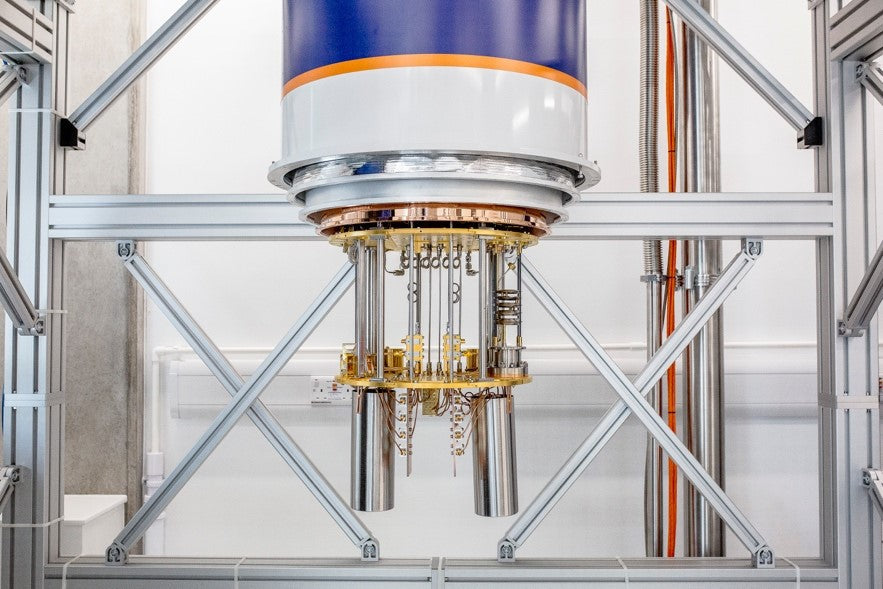
OQC Lucy was the first European quantum computer made available on AWS Braket, marking a significant milestone in cloud-based quantum computing accessibility.
From a data analyst's perspective, understanding the landscape of quantum hardware requires a careful examination of both cutting-edge systems and foundational platforms that have shaped the industry. OQC Lucy, an 8-qubit superconducting quantum computer, represents a pivotal moment in this evolution. Launched and made publicly available on AWS Braket on February 28, 2022, Lucy holds the distinction of being the first European quantum computer accessible via a major public cloud platform. This achievement not only highlighted OQC's engineering capabilities but also significantly broadened access to quantum computing resources for researchers, developers, and enterprises across Europe and globally.
The introduction of Lucy to AWS Braket was more than just a technical rollout; it was a strategic move that democratized access to quantum hardware. Prior to this, access to such systems was often limited to academic institutions or large corporations with direct partnerships. By integrating with AWS Braket, OQC enabled a pay-per-task/shot model, making quantum computation more approachable and cost-effective for a wider audience. This accessibility is crucial for data analysts who need to experiment with quantum algorithms, validate theoretical models, and explore the practical implications of quantum computing without the prohibitive costs of owning or maintaining their own quantum hardware.
Lucy is built upon superconducting transmon qubits, a well-established and widely adopted technology in the quantum computing field. This choice of technology, combined with OQC's third-generation design, aimed to deliver a stable and reliable platform. For an analyst, the underlying technology dictates many aspects of a system's performance, including coherence times, gate fidelities, and scalability potential. While Lucy's 8-qubit count might seem modest compared to some of today's larger systems, it was a significant step forward in 2022, providing a tangible environment for developing and testing quantum circuits. Its design focuses on gate-based computation, which is the dominant paradigm for many quantum algorithms, making it suitable for a broad range of computational tasks.
A key characteristic highlighted by OQC is Lucy's operational stability and high uptime. The system, deployed in the UK, has demonstrated remarkable resilience, with its cryostat maintaining 'cold' conditions for over two years. This level of operational reliability is a critical factor for data analysts and researchers. Uninterrupted access ensures that experiments can be run consistently, reducing delays and improving the efficiency of research cycles. In a field where hardware availability can be a bottleneck, Lucy's robust performance has been a significant asset for early adopters on AWS Braket.
Furthermore, Lucy's integration with AWS Braket means it supports hybrid quantum-classical tasks. This capability is particularly relevant for data analysts, as many practical quantum applications today involve a synergistic approach where classical computers handle complex optimization or data pre-processing, while the quantum computer performs specific quantum subroutines. The ability to seamlessly orchestrate these hybrid workflows through a familiar cloud environment like AWS Braket simplifies development and deployment, allowing analysts to focus on algorithm design and data interpretation rather than infrastructure management. Lucy, while an older generation system, continues to serve as a valuable platform for exploring these hybrid paradigms and understanding the practical challenges and opportunities they present.
In summary, OQC Lucy's significance lies not just in its technical specifications but in its role as an enabler. It expanded access, demonstrated operational robustness, and provided a concrete platform for early quantum exploration. For data analysts, it represents a case study in how quantum hardware can be integrated into existing cloud infrastructure, offering a tangible resource for learning, experimentation, and the development of foundational quantum skills, even as OQC continues its roadmap towards more advanced systems like Toshiko.
| Spec | Details |
|---|---|
| System ID | oqc-lucy |
| Vendor | OQC |
| Technology | Superconducting |
| Status | Public cloud |
| Primary metric | 8 physical qubits |
| Metric meaning | Number of superconducting transmon qubits |
| Qubit mode | Discrete qubits using superconducting transmons for gate-based computation |
| Connectivity | Not specified |
| Native gates | Not specified |
| Error rates & fidelities | Not publicly confirmed; checked vendor site, no rates for Lucy |
| Benchmarks | Not specified |
| How to access | AWS Braket |
| Platforms | AWS Braket |
| SDKs | Qiskit | OpenQASM |
| Regions | eu-west-2 |
| Account requirements | AWS account |
| Pricing model | Pay-per-task/shot |
| Example prices | Task $0.30 | Shots $0.01/1000 (est. 2022) |
| Free tier / credits | No |
| First announced | 2022-02-28 |
| First available | 2022-02-28 |
| Major revisions | None |
| Retired / roadmap | Active but older; roadmap to Toshiko |
| Notes | First EU on Braket; cold for a year (2023) |
Understanding the capabilities of a quantum computing system like OQC Lucy from a data analyst's perspective requires a detailed look at its technical specifications, operational characteristics, and the implications of both known and unknown metrics. Lucy is an 8-qubit superconducting quantum computer, utilizing transmon qubits. This architecture is foundational for gate-based quantum computation, meaning it executes quantum algorithms by applying a sequence of quantum gates to qubits, analogous to classical logic gates. The discrete nature of these qubits allows for precise control and manipulation, which is essential for building complex quantum circuits.
Qubit Architecture and Technology: Lucy's 8 physical qubits are based on superconducting transmon technology. Transmon qubits are a type of superconducting circuit that behaves as an artificial atom, with energy levels that can be used to encode quantum information. This technology is known for its relatively long coherence times and high gate fidelities compared to some other qubit modalities, although specific values for Lucy are not publicly confirmed. For a data analyst, the number of physical qubits directly impacts the complexity of the problems that can be addressed. While 8 qubits are suitable for small-scale simulations, algorithm prototyping, and educational purposes, they are generally insufficient for tackling classically intractable problems. The 'physical' designation is important, as it distinguishes them from 'logical' qubits, which would incorporate error correction and require many more physical qubits.
Connectivity and Native Gates: A critical aspect for any quantum system is its qubit connectivity topology, which dictates how qubits can interact directly. Unfortunately, for OQC Lucy, this information is 'Not specified' in publicly available documentation. From a data analyst's viewpoint, the absence of a clear connectivity map is a significant limitation. It means that to perform two-qubit gates between non-adjacent qubits, 'SWAP' gates must be inserted into the circuit. Each SWAP gate consumes quantum resources (time and coherence) and introduces additional errors, effectively increasing the circuit depth and reducing the overall fidelity of the computation. Similarly, the 'native gates' supported by Lucy are 'Not specified'. The native gate set influences the efficiency of compiling quantum algorithms. A rich native gate set can lead to shallower circuits, while a more restricted set might require more complex decompositions, again impacting circuit depth and error accumulation.
Error Rates and Fidelities: Perhaps the most crucial missing data point for a data analyst evaluating Lucy is the 'error rates and fidelities'. The facts state, 'Not publicly confirmed; checked vendor site, no rates for Lucy.' This lack of public data for gate fidelities (e.g., single-qubit and two-qubit gate errors), readout fidelity, and coherence times (T1 and T2) makes it challenging to quantitatively assess the system's performance. Without these metrics, it is difficult to predict the reliability of computational results, design effective error mitigation strategies, or compare Lucy's performance against other quantum systems. For an older generation system like Lucy, it's possible these metrics were either not rigorously published or are considered less relevant for current cutting-edge research, but for foundational understanding and comparative analysis, their absence is notable.
Benchmarks: 'Not specified' benchmarks further complicate performance evaluation. Standardized benchmarks, such as quantum volume or cross-entropy benchmarking, provide a common ground for comparing the effective computational power of different quantum processors. Without such benchmarks, analysts must rely on anecdotal evidence or conduct their own empirical tests, which can be time-consuming and resource-intensive. This highlights a general challenge in the quantum computing industry: the need for more transparent and standardized performance reporting.
Operational Limits: Lucy offers 'Unlimited per job (est.)' shots, which is a significant advantage for statistical analysis and error mitigation techniques that rely on repeated circuit execution. However, other critical limits like 'depth duration' and 'queue other' are 'Not specified'. Circuit depth (the number of sequential gate operations) is a primary constraint for noisy intermediate-scale quantum (NISQ) devices, as errors accumulate with each gate. Job duration limits can impact the execution of longer algorithms or complex hybrid workflows. The absence of these specifications means users must empirically determine practical limits, which can lead to failed jobs and wasted computational resources.
Intended Use Cases and Tradeoffs: OQC Lucy is primarily designed for 'Gate-based quantum algorithms' and 'Hybrid quantum-classical tasks'. Its capabilities extend to specific applications like 'Precipitation forecasting', indicating its potential for scientific and environmental modeling. The system's 'tradeoffs' include its 'Small scale' (8 qubits), which limits the complexity of problems it can address, and the inherent requirement for 'cryogenics' to maintain superconducting temperatures. However, these are balanced by its 'High uptime' and convenient 'Cloud access' via AWS Braket, which lowers the barrier to entry. The system also supports 'Co-processing for efficiency', implying that it is designed to work in conjunction with classical computing resources, a common paradigm for current quantum applications.
In conclusion, while OQC Lucy provides a stable and accessible platform for early quantum exploration and algorithm development, a data analyst must be aware of the significant gaps in publicly available performance metrics. Its value lies in its historical significance, operational reliability, and accessibility for learning and prototyping, rather than its raw computational power for large-scale, complex problems without detailed performance data.
| System | Status | Primary metric |
|---|---|---|
| OQC Toshiko | Private preview | 32 physical qubits: 32 |
The journey of OQC Lucy, from its announcement to its ongoing availability, provides a valuable timeline for understanding the maturation of cloud-based quantum computing. For a data analyst, tracking these milestones helps contextualize the system's capabilities and its role within the broader quantum ecosystem.
February 28, 2022: First Announced and Made Available
This date marks a significant milestone: OQC Lucy was officially announced and simultaneously made available to the public via AWS Braket. This immediate availability was notable, allowing users to access the hardware from day one. Crucially, Lucy became the 'first European quantum computer' to be hosted on AWS Braket, a testament to OQC's pioneering efforts in bringing quantum hardware to a global cloud audience. This event significantly lowered the barrier to entry for quantum computing, enabling researchers and developers worldwide to experiment with a real quantum processor without the need for specialized on-premise infrastructure. The system, named after Lucy, was designed to focus on accessibility, aligning with OQC's mission to make quantum computing practical and usable.
Preceded by Sophia (4 qubits)
While Lucy itself was a significant step, it's important to note its lineage. Lucy was preceded by OQC's Sophia, a 4-qubit system. This indicates a clear progression in OQC's hardware development, with Lucy representing an evolution in qubit count and potentially performance from its predecessor. Understanding this internal roadmap helps analysts appreciate the iterative nature of quantum hardware development and OQC's commitment to scaling their technology.
Operational Longevity and Reliability
A remarkable aspect of Lucy's operational history is its sustained uptime. The system has maintained its 'cold' operational state for over two years since its launch. For a data analyst, this metric of operational reliability is paramount. Consistent uptime ensures that scheduled experiments can be run without interruption, minimizing delays and maximizing research efficiency. The engineering achievement of keeping a superconducting quantum computer operational in a cryostat for such an extended period underscores OQC's robust hardware design and maintenance protocols, which are critical for the long-term viability of quantum cloud services.
An 'Older Generation' System with Active Status
As of current reporting, Lucy is considered an 'older generation' system within OQC's rapidly evolving portfolio. However, it remains 'active' on AWS Braket. This status is important for analysts: while newer, more powerful systems are emerging, Lucy continues to provide a stable platform for specific tasks, particularly for learning, algorithm prototyping, and exploring hybrid quantum-classical workflows on a smaller scale. Its continued availability speaks to its foundational utility and OQC's commitment to supporting its existing hardware while simultaneously pursuing advancements.
Roadmap to Toshiko
OQC's roadmap clearly points towards more advanced systems, with Toshiko being the next major iteration. This forward-looking perspective is crucial for analysts planning future quantum research. Lucy serves as a stepping stone, providing valuable operational data and user feedback that informs the development of subsequent, more powerful processors. Understanding that Lucy is part of a larger, evolving hardware strategy helps analysts anticipate future capabilities and plan their long-term quantum computing strategies.
In essence, Lucy's timeline showcases a successful early deployment of quantum hardware in the cloud, demonstrating both the technical feasibility and the practical benefits of such accessibility. It highlights OQC's engineering prowess in maintaining high uptime and its strategic approach to hardware development, moving from foundational systems to more complex architectures.
Verification confidence: Medium. Specs can vary by revision and access tier. Always cite the exact device name + date-stamped metrics.
OQC Lucy is an 8-qubit superconducting quantum computer developed by Oxford Quantum Circuits (OQC). It gained prominence as the first European quantum computer to be made publicly available on AWS Braket, Amazon's cloud quantum computing service, in February 2022.
Lucy utilizes superconducting transmon qubits. This is a common and well-established technology for building gate-based quantum computers, known for its relative stability and control.
You can access OQC Lucy through AWS Braket. This requires an AWS account. Once set up, you can use the AWS Braket SDKs, including support for Qiskit and OpenQASM, to submit quantum circuits to Lucy.
Lucy is designed for gate-based quantum algorithms and hybrid quantum-classical tasks. It's suitable for early-stage quantum algorithm development, educational purposes, and exploring specific applications like precipitation forecasting, as well as general quantum computing research on a small scale.
According to OQC's public documentation and AWS Braket information, specific error rates, gate fidelities, and coherence times for OQC Lucy are not publicly confirmed. This means users should be aware that detailed performance metrics are not readily available for direct comparison or precise error modeling.
The facts indicate that there is no explicit free tier or credits offered specifically for OQC Lucy. Usage is typically charged on a pay-per-task/shot model. Users should check the latest AWS Braket pricing for any general promotional offers or credits that might apply.
OQC Lucy supports popular quantum software development kits (SDKs) including Qiskit and OpenQASM. This allows a broad range of quantum developers to write and execute circuits on the system using familiar programming environments.