
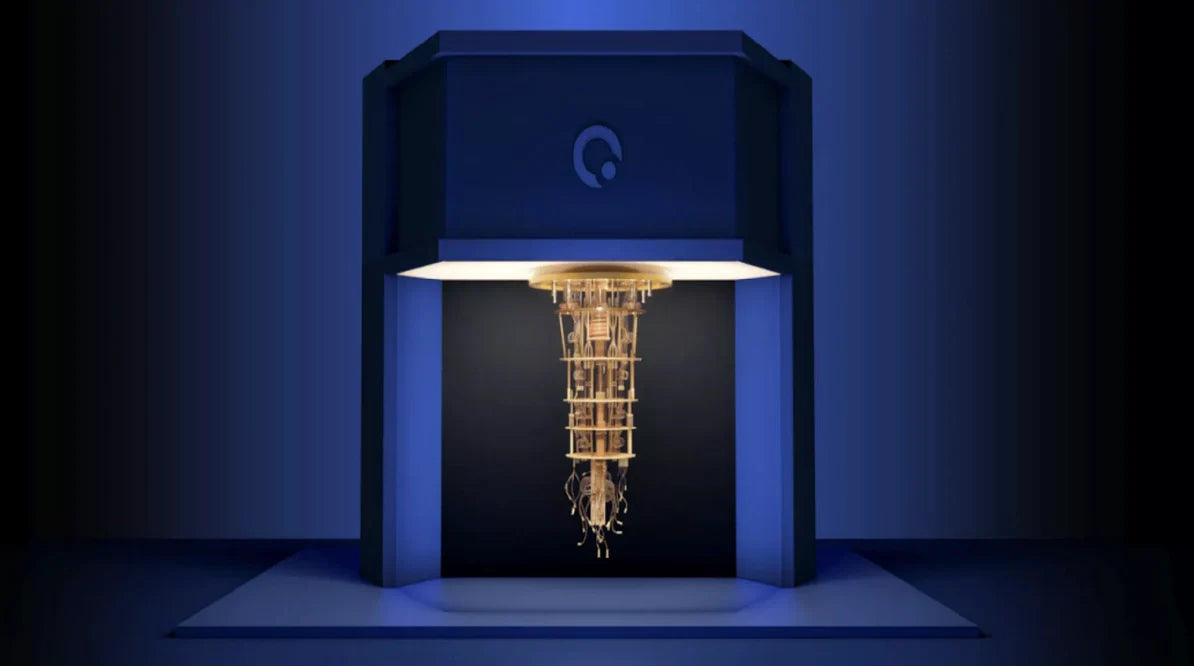
This 24-qubit superconducting quantum computer, delivered in 2023, marks a significant step towards practical quantum applications in a commercial setting.
The Origin Quantum Wuyuan system represents a pivotal moment in the global quantum computing landscape, being heralded as China's first commercially delivered quantum computer. Unveiled by Origin Quantum, a prominent player in the Chinese quantum technology sector, the Wuyuan system is built upon superconducting qubit technology, a leading paradigm in the race for scalable quantum computation. Its delivery in January 2023 to an unnamed commercial customer signifies a crucial transition from purely research-oriented prototypes to deployable, albeit early-stage, quantum hardware solutions.
From a data analyst's perspective, the Wuyuan's commercial availability is a key indicator of the maturing quantum ecosystem. While the system's 24 physical qubits place it firmly within the Noisy Intermediate-Scale Quantum (NISQ) era, its status as a delivered product suggests a level of operational stability, vendor support, and integration readiness that distinguishes it from experimental lab setups. This move towards commercialization underscores the growing confidence in quantum computing's potential to address specific, complex computational challenges, even if the path to widespread, fault-tolerant quantum advantage remains long.
The significance of the Wuyuan system extends beyond its technical specifications. It highlights the increasing geopolitical competition and national strategic investments in quantum technologies. As nations vie for leadership in this transformative field, the delivery of a domestic commercial quantum computer positions China as a serious contender. For businesses and researchers considering quantum solutions, the Wuyuan's existence broadens the vendor landscape and offers an alternative platform, particularly for those operating within or collaborating with entities in the Chinese market. However, the limited public data surrounding its performance metrics necessitates a cautious and data-driven approach to its evaluation and potential application.
Understanding the Wuyuan requires an appreciation of the current state of quantum hardware. Twenty-four physical qubits, while a modest number compared to some of the larger research systems announced globally, is a substantial achievement for a commercially delivered unit. These qubits are the fundamental building blocks for quantum algorithms, and their quality, connectivity, and coherence times are paramount to the system's utility. The Wuyuan's gate-based superconducting architecture means it operates by manipulating these qubits through precisely timed microwave pulses to execute quantum logic gates, forming the basis of quantum circuits. This programmable nature allows for a wide range of algorithms to be implemented, from quantum simulations to optimization problems, albeit within the constraints of the system's size and inherent noise.
The 'commercial system' designation implies that Origin Quantum has addressed, to some extent, the engineering challenges associated with packaging, operating, and maintaining a quantum computer outside of a dedicated research laboratory. This includes aspects like cryogenic infrastructure, control electronics, and software interfaces designed for user interaction. For potential users, this means a more streamlined experience compared to building a quantum computer from scratch, but it also introduces new considerations regarding integration with existing classical IT infrastructure, ongoing maintenance, and the availability of technical support. The Wuyuan's delivery therefore serves as a tangible benchmark for the industry's progress in making quantum hardware accessible and operational for enterprise-level applications, even if those applications are currently focused on specific, early-stage use cases and research endeavors.
| Spec | Details |
|---|---|
| System ID | ORIGIN_WUYUAN |
| Vendor | Origin Quantum |
| Technology | Superconducting quantum computing |
| Status | Delivered commercial system |
| Primary metric | Physical qubits |
| Metric meaning | Number of qubits in KF-C24-100 chip |
| Qubit mode | Gate-based superconducting, programmable |
| Connectivity | Not confirmed |
| Native gates | Not confirmed |
| Error rates & fidelities | Not publicly confirmed |
| Benchmarks | Far superior to classical on specific tasks (2023) |
| How to access | Direct delivery to customer |
| Platforms | On-premise |
| SDKs | Origin OS | QPanda |
| Regions | N/A |
| Account requirements | N/A |
| Pricing model | Enterprise sale |
| Example prices | Not specified |
| Free tier / credits | None |
| First announced | 2021-02 (Wuyuan 2) |
| First available | 2023-01 |
| Major revisions | Benyuan Wuyuan 2 (2021) |
| Retired / roadmap | Active for customer |
| Notes | Details sparse, older model |
The Origin Quantum Wuyuan system is a superconducting, gate-based quantum computer, designed for programmable execution of quantum algorithms. Its core component is the KF-C24-100 chip, which houses 24 physical qubits. This architecture places it squarely within the mainstream of contemporary quantum hardware development, leveraging the well-established principles of superconducting circuits for quantum information processing.
Core Architecture and Qubit CountThe Wuyuan system's foundation is its 24 physical qubits, fabricated on the KF-C24-100 chip. Superconducting qubits operate at extremely low temperatures, typically millikelvin ranges, to minimize thermal noise and maintain quantum coherence. These qubits are manipulated using microwave pulses to perform quantum logic gates, enabling the construction of quantum circuits. The gate-based nature means users can design and execute algorithms by specifying sequences of quantum operations. While 24 qubits are sufficient for exploring certain quantum phenomena and demonstrating quantum advantage on highly specific, constrained problems, it is crucial for data analysts to understand that this number is still relatively small for tackling large-scale, complex real-world problems that would require fault-tolerant quantum computing. The effective number of qubits usable for computation is often lower than the physical count due to error rates and coherence limitations.
Performance Metrics and BenchmarkingOrigin Quantum has stated that the Wuyuan system demonstrated performance 'far superior to classical on specific tasks' in 2023. This claim, while significant, lacks the detailed public context necessary for a thorough analytical assessment. For data analysts, understanding the specific tasks (e.g., quantum chemistry simulations, certain optimization problems, random circuit sampling), the classical benchmarks used for comparison, and the precise metrics of superiority (e.g., speedup, accuracy, problem size) is paramount. Without this granularity, it is challenging to evaluate the true practical advantage of the system for diverse applications.
Crucially, detailed error rates and fidelities for the Wuyuan system have not been publicly confirmed. These metrics—such as single-qubit gate fidelity, two-qubit gate fidelity, readout fidelity, and qubit coherence times (T1 and T2)—are the bedrock for assessing the quality and reliability of any quantum computer. High error rates severely limit the depth of quantum circuits that can be executed meaningfully, effectively reducing the computational power of the system. The absence of this data makes direct, quantitative comparison with other leading quantum hardware platforms exceedingly difficult and complicates the process of estimating the system's suitability for specific algorithms.
Similarly, limits on shots, circuit depth, and duration of computation have not been confirmed. These operational parameters directly impact the feasibility and cost of running quantum experiments and algorithms. For instance, a low shot count limit might necessitate more classical post-processing or statistical analysis, while a shallow depth limit restricts the complexity of algorithms that can be implemented. The lack of transparency in these areas presents a significant hurdle for data analysts attempting to model the system's performance or plan computational workloads.
Software and Programming EnvironmentThe Wuyuan system is supported by Origin OS and the QPanda SDK. Origin OS serves as the underlying operating system, managing the hardware resources and providing a platform for quantum computation. QPanda, as a Software Development Kit, offers a programming interface for users to design, simulate, and execute quantum algorithms. SDKs like QPanda are vital for abstracting the low-level hardware control, allowing developers to focus on algorithm design. They typically provide tools for circuit construction, simulation, and compilation, often supporting hybrid quantum-classical workflows. The availability of a dedicated OS and SDK indicates a commitment to providing a full-stack solution, which is essential for commercial deployment and user accessibility.
Connectivity and Gate SetDetails regarding the connectivity topology and native gate set of the Wuyuan's KF-C24-100 chip have not been publicly confirmed. Connectivity refers to how qubits are physically linked, determining which pairs can interact directly via two-qubit gates. A limited connectivity can necessitate 'swapping' operations, increasing circuit depth and error accumulation. The native gate set defines the fundamental quantum operations the hardware can perform directly. Knowledge of these aspects is critical for efficient algorithm mapping and optimization, as it directly impacts circuit compilation and overall performance. Without this information, developers face challenges in designing algorithms that optimally leverage the hardware's capabilities.
Comparability ConsiderationsFor data analysts, comparing the Wuyuan system to other quantum computers is challenging due to the limited public disclosure of critical performance metrics. While the 24 physical qubits provide a baseline, the true 'power' of a NISQ device is determined by its effective qubit count, which is a function of qubit quality (fidelities, coherence) and connectivity. The claim of 'far superior to classical on specific tasks' is a qualitative statement that needs quantitative backing to be actionable. Future disclosures of error rates, coherence times, and detailed benchmark results will be essential for a comprehensive, data-driven evaluation of the Wuyuan's capabilities relative to its peers in the global quantum computing landscape.
| System | Status | Primary metric |
|---|---|---|
| Origin Quantum Wukong | Active commercial system | Physical qubits: 72 (198 total) |
The development and commercialization of the Origin Quantum Wuyuan system represent a significant journey from research and development to a tangible, delivered product. This timeline highlights key milestones that underscore its progression within the quantum computing industry.
This timeline illustrates a relatively rapid progression from announcement to commercial delivery, reflecting the intense pace of innovation and competition in the quantum computing space. The Wuyuan's journey from concept to a delivered product provides a concrete example of how quantum hardware is beginning to transition into the commercial domain, setting a precedent for future developments in the region and globally.
Verification confidence: Medium. Specs can vary by revision and access tier. Always cite the exact device name + date-stamped metrics.
The Origin Quantum Wuyuan is a 24-qubit superconducting quantum computer, notable as China's first commercially delivered quantum computer. It was delivered to an unnamed commercial customer in January 2023.
The system employs superconducting quantum computing technology, specifically a gate-based, programmable architecture. This means it uses superconducting circuits operating at cryogenic temperatures to perform quantum logic operations.
The Wuyuan system features 24 physical qubits, housed on its KF-C24-100 chip. These qubits are the fundamental units for quantum information processing.
No, the Origin Quantum Wuyuan is not publicly accessible. It is available through a direct enterprise delivery model, meaning it is installed on-premise for specific commercial customers, rather than being offered as a cloud service.
Users of the Wuyuan system can leverage Origin OS, the quantum computer's operating system, and the QPanda SDK (Software Development Kit) for designing, simulating, and executing quantum algorithms.
Origin Quantum has stated that the Wuyuan system demonstrated performance 'far superior to classical on specific tasks' in 2023. However, detailed performance metrics such as error rates, fidelities, and coherence times have not been publicly confirmed, making direct comparison with other systems challenging.
Acquisition of the Wuyuan system is handled through an enterprise sale model. Interested organizations must contact Origin Quantum directly to discuss their needs and obtain a custom quote, as specific pricing is not publicly disclosed.
The Wuyuan's commercial delivery is significant as it marks China's first such achievement, demonstrating a transition from quantum research to deployable, albeit early-stage, commercial quantum hardware. It underscores the global race in quantum computing and the increasing maturity of the technology for specific practical applications.