
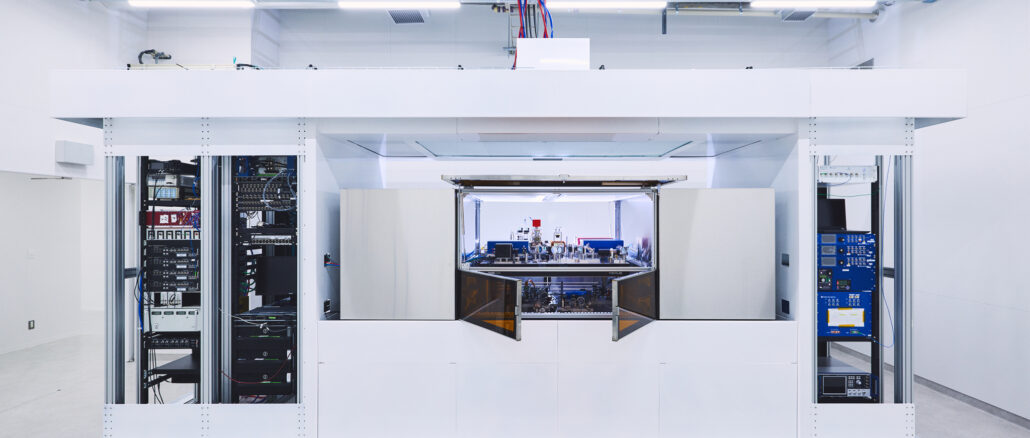
The QuEra Lyra system remains an enigma in the quantum computing landscape, with no public specifications or availability details confirmed.
As a data analyst tasked with evaluating the rapidly evolving quantum hardware ecosystem, the QuEra Lyra presents a unique and challenging profile. Unlike many systems that boast detailed specifications, benchmark results, and clear access pathways, information regarding the QuEra Lyra is conspicuously absent from public domains. This situation underscores a critical aspect of quantum hardware assessment: the absolute necessity of transparent, verifiable data for informed decision-making. Without concrete metrics, any analysis remains speculative, hindering direct comparability and strategic planning for quantum application development.
QuEra Computing, the vendor behind the purported Lyra system, is a well-regarded entity in the quantum space, particularly known for its advancements in neutral atom quantum computing. Their work often involves leveraging highly coherent Rydberg atoms trapped by optical tweezers, a technology that promises scalability and high connectivity. Systems like their 256-qubit Aquilon platform, or their earlier 48-qubit machine available via AWS Braket, have demonstrated significant capabilities in quantum simulation and optimization tasks. However, it is crucial to distinguish between the vendor's general technological prowess and the specific, unconfirmed details of a particular system like the Lyra. The absence of public information about Lyra means we cannot assume it shares the characteristics or even the underlying technology of QuEra's other, publicly detailed offerings.
For a data analyst, the process of profiling a quantum computer typically begins with a deep dive into its core specifications: qubit count, type, coherence times, gate fidelities, connectivity, and error rates. These metrics form the bedrock for assessing a system's potential utility for various algorithms, its readiness for fault-tolerant computing, and its overall performance envelope. Furthermore, understanding the system's architecture – whether it's superconducting, trapped-ion, neutral atom, photonic, or another modality – provides crucial context for its strengths, weaknesses, and scaling potential. In the case of the QuEra Lyra, all these foundational data points are currently 'Not publicly confirmed,' making a traditional comparative analysis impossible.
The lack of public data for the QuEra Lyra necessitates a shift in analytical approach. Instead of detailing specific performance characteristics, this profile must focus on the implications of this information vacuum. It highlights the importance of vendor transparency, the challenges of evaluating nascent or unannounced technologies, and the due diligence required to track potential future systems. For organizations looking to invest in quantum computing, relying on unconfirmed systems carries inherent risks. Therefore, this profile serves as a placeholder, emphasizing what *would* typically be analyzed and why its absence is significant. It also acts as a call to action for continuous monitoring of official announcements and peer-reviewed publications from QuEra Computing to ascertain the Lyra's true nature and capabilities, should it eventually be formally introduced to the market.
Ultimately, the goal of a hardware profile is to empower users to make informed choices about which quantum resources best suit their computational needs. This involves understanding not just raw performance numbers, but also the practicalities of access, pricing models, software development kits (SDKs), and the vendor's roadmap. Without any of these details for the QuEra Lyra, its current status is one of potential, rather than proven, utility. This profile, therefore, is less about what the Lyra *is* and more about what it *represents* in the broader context of quantum hardware development and the critical need for verifiable data in this rapidly advancing field.
| Spec | Details |
|---|---|
| System ID | QuEra Lyra |
| Vendor | QuEra Computing |
| Technology | Not publicly confirmed |
| Status | Not publicly confirmed |
| Primary metric | Not publicly confirmed |
| Metric meaning | Not publicly confirmed |
| Qubit mode | Not publicly confirmed |
| Connectivity | Not publicly confirmed |
| Native gates | Not publicly confirmed |
| Error rates & fidelities | Not publicly confirmed |
| Benchmarks | Not publicly confirmed |
| How to access | Not publicly confirmed |
| Platforms | Not publicly confirmed |
| SDKs | Not publicly confirmed |
| Regions | Not publicly confirmed |
| Account requirements | Not publicly confirmed |
| Pricing model | Not publicly confirmed |
| Example prices | Not publicly confirmed |
| Free tier / credits | Not publicly confirmed |
| First announced | Not publicly confirmed |
| First available | Not publicly confirmed |
| Major revisions | Not publicly confirmed |
| Retired / roadmap | Not publicly confirmed |
| Notes | Not publicly confirmed |
When evaluating any quantum computing system, a data analyst typically scrutinizes a comprehensive set of capabilities to understand its potential and limitations. For the QuEra Lyra, however, nearly all these critical metrics remain 'Not publicly confirmed,' presenting a significant challenge for a detailed technical assessment. This section will outline the standard parameters we would normally analyze, highlighting the current data void for the Lyra system.
Qubit Technology and Count:A fundamental starting point is the underlying qubit technology and the total number of physical qubits. QuEra Computing is renowned for its neutral atom quantum computers, which utilize arrays of individual atoms trapped by optical tweezers. This approach is known for its potential scalability and high connectivity. However, for the QuEra Lyra specifically, the 'technology' and 'primary metric' (often qubit count) are 'Not publicly confirmed.' Without this, we cannot ascertain the system's raw computational capacity or compare it to other neutral atom platforms, let alone systems based on superconducting, trapped-ion, or photonic technologies. The absence of a confirmed qubit count means we cannot even begin to estimate the size of quantum states it could process or the complexity of algorithms it might execute.
Qubit Mode and Connectivity:Beyond the sheer number, the 'qubit mode explanation' (e.g., whether qubits are fixed-frequency, tunable, or how they are addressed) and 'connectivity topology' are crucial. High connectivity, where any qubit can interact with many others, can significantly simplify algorithm mapping and reduce the need for costly SWAP operations. Neutral atom systems often boast high, reconfigurable connectivity. However, for the Lyra, both these aspects are 'Not publicly confirmed.' This leaves us unable to assess how efficiently quantum circuits could be implemented or the overhead associated with qubit interactions.
Native Gate Set and Error Rates:The 'native gates' available on a system define the fundamental operations it can perform. A universal gate set is essential for arbitrary quantum computation. Equally critical are the 'error rates and fidelities' associated with these gates (e.g., single-qubit gate fidelity, two-qubit gate fidelity, measurement fidelity). These metrics directly impact the depth of circuits that can be reliably executed before noise overwhelms the computation. For the QuEra Lyra, both the 'native gates' and 'error rates/fidelities' are 'Not publicly confirmed.' This means we have no basis to evaluate the quality of its quantum operations or its suitability for running even simple algorithms, let alone more complex ones requiring error mitigation or eventual fault tolerance.
Benchmarks and Performance Limits:Standardized 'benchmarks' (e.g., Quantum Volume, Qubit Count, CLOPS, application-specific benchmarks) provide a comparative measure of a system's overall performance. These benchmarks integrate various hardware characteristics into a single score. Furthermore, 'limits on shots' (number of repetitions per circuit), 'limits on depth/duration' (maximum circuit depth or coherence time), and 'limits on queue/other' (e.g., job queue length, concurrent users) are practical considerations for any user. For the QuEra Lyra, all these 'benchmarks' and 'limits' are 'Not publicly confirmed.' This makes it impossible to gauge its practical throughput, the complexity of problems it could tackle, or its operational constraints for real-world workloads.
Software Development Kits (SDKs) and Access Platforms:The usability of a quantum computer is heavily dependent on the available 'SDKs' and 'platforms' through which it can be accessed. A robust SDK (like Qiskit, Cirq, PennyLane, or specific vendor SDKs) simplifies programming and integration. Access via cloud platforms (e.g., AWS Braket, Azure Quantum, IBM Quantum Experience) provides broad accessibility. For the QuEra Lyra, both 'platforms' and 'SDKs' are 'Not publicly confirmed.' This means even if the system existed, its practical utility would be severely hampered by the lack of known programmatic interfaces or access points.
In summary, the QuEra Lyra currently exists as a name without a public technical profile. For a data analyst, this means that any assessment of its 'what it is for' (which is listed as 'low' in the facts, implying low current utility due to lack of information) or its 'tradeoffs' is impossible. The absence of data on technology, qubits, gates, error rates, benchmarks, and access mechanisms renders it unquantifiable and incomparable to any other quantum system currently available or publicly announced. Until QuEra Computing releases official specifications, the Lyra remains a theoretical entity, awaiting its formal introduction to the quantum hardware landscape.
| System | Status | Primary metric |
|---|---|---|
| QuEra Aquila Quantum Processor | Public cloud access | Neutral atoms: 256 |
The lifecycle of a quantum computing system, from its initial announcement to its public availability and subsequent revisions, is a critical aspect for data analysts and potential users. It provides context for maturity, stability, and future development. However, for the QuEra Lyra, the timeline remains entirely 'Not publicly confirmed,' making it impossible to construct a historical or forward-looking view based on verifiable facts.
First Announced: The 'first announced' date for the QuEra Lyra is 'Not publicly confirmed.' In the quantum industry, new systems are typically unveiled through press releases, scientific publications, or major industry conferences. The absence of such an announcement for the Lyra suggests it may be an internal project, a future system under development, or potentially a misidentification, as noted in the facts (possible confusion with Pasqal Lyra).
First Available: Similarly, the 'first available' date for public or private access is 'Not publicly confirmed.' Public availability usually follows a period of internal testing and beta programs, often with a phased rollout to select partners before broader access. Without an announcement, there can be no availability date.
Major Revisions: Information on 'major revisions' or upgrades to the QuEra Lyra is also 'Not publicly confirmed.' Established quantum systems often undergo iterative improvements, such as increased qubit count, enhanced gate fidelities, or new connectivity features. These revisions are important for tracking the system's evolution and performance trajectory. For the Lyra, this data point is, by necessity, absent.
Retired/Roadmap: The 'retired roadmap' status is 'Not publicly confirmed.' A clear roadmap is invaluable for users to understand a vendor's long-term vision, planned upgrades, and potential retirement of older systems. The absence of any public mention of the Lyra means there is no roadmap to speak of, nor any indication of its potential retirement.
The overall situation for the QuEra Lyra's timeline is one of complete opacity. This lack of historical data makes it challenging to assess the system's current stage of development, its expected maturity, or its potential longevity. For a data analyst, this means that any strategic planning that relies on the QuEra Lyra as a future resource would be based purely on speculation, which is a high-risk approach. It underscores the importance of official vendor communications and verifiable public records when evaluating quantum hardware. Until QuEra Computing provides concrete information, the QuEra Lyra remains outside the scope of a data-driven timeline analysis, existing as a potential, rather than a confirmed, entry in the quantum hardware landscape.
In the broader context of QuEra Computing's history, the company has made significant strides in neutral atom quantum computing, securing substantial funding and demonstrating impressive qubit counts in their other systems. For instance, their collaboration with AWS Braket for a 48-qubit machine and the announcement of the 256-qubit Aquilon system showcase their capability to develop and deploy advanced quantum hardware. However, it is critical to reiterate that these achievements pertain to *other* QuEra systems and cannot be extrapolated to the unconfirmed QuEra Lyra. The Lyra's absence from public timelines, despite QuEra's active presence in the quantum community, suggests it is either a very early-stage project, an internal codename, or perhaps a system that has not yet been formally introduced to the market. Users and analysts should therefore exercise caution and await official announcements before incorporating the QuEra Lyra into any quantum strategy or comparative analysis.
Verification confidence: not publicly confirmed. Specs can vary by revision and access tier. Always cite the exact device name + date-stamped metrics.
Based on current public information, the QuEra Lyra appears to be an unannounced or future system from QuEra Computing. There are no publicly confirmed details regarding its specifications, capabilities, or availability.
While QuEra Computing is a leader in neutral atom quantum computing, the specific technology for the QuEra Lyra has not been publicly confirmed. We cannot assume it uses the same technology as their other known systems without official disclosure.
The qubit count for the QuEra Lyra is 'Not publicly confirmed.' This key metric, essential for assessing computational power, is currently unknown.
There is no publicly confirmed information regarding access to the QuEra Lyra. Its public access status, how to access it, and through which platforms are all unknown.
No performance benchmarks, such as Quantum Volume, gate fidelities, or coherence times, have been publicly confirmed for the QuEra Lyra. Without these, its performance cannot be evaluated or compared.
No public pricing information, including the pricing model, example costs, or free tier availability, has been disclosed for the QuEra Lyra system.
The 'first announced' and 'first available' dates for the QuEra Lyra are 'Not publicly confirmed.' There is no public timeline for this system's development or release.