
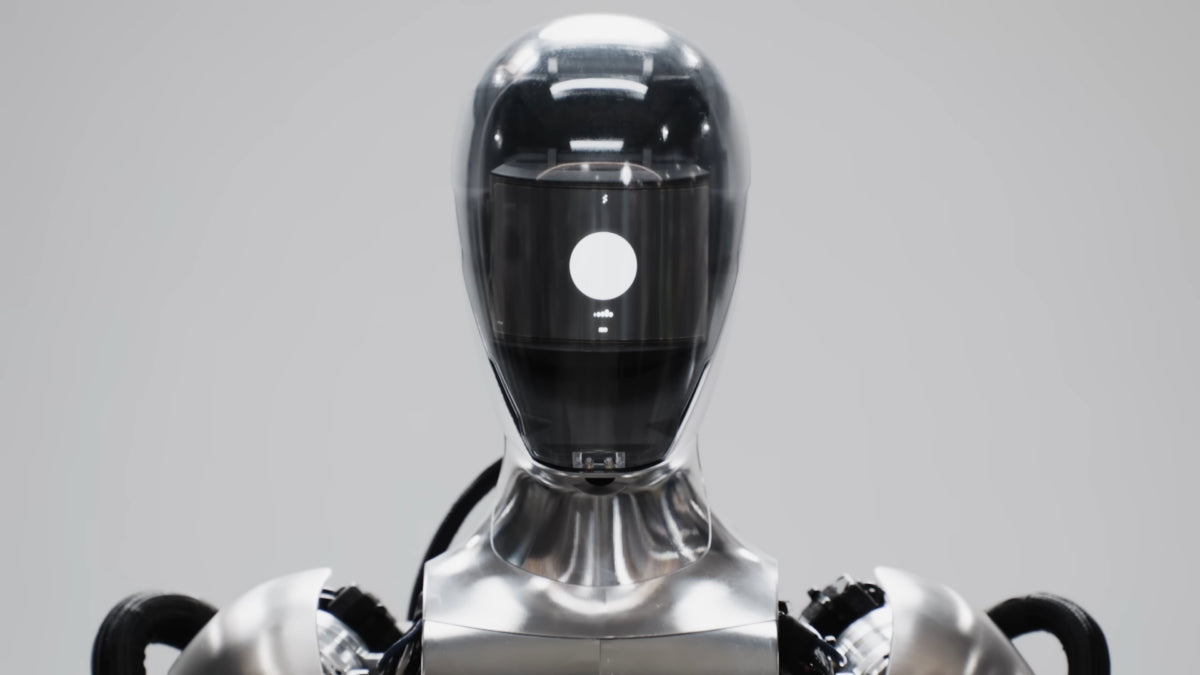
FIGURE 01 is best understood as a systems bet: build a human-scale body that can physically fit existing industrial layouts, then make the intelligence layer general enough to learn new tasks without writing a new control stack for every job. The early proof points aren’t about acrobatics—they’re about whether the robot can run safely in a real production environment, recover from exceptions, and produce measurable throughput with an operator-friendly rollout playbook.
Humanoid robotics has a hype problem: videos can make anything look “nearly solved” while the real bottleneck is always the same—reliability at scale. FIGURE 01 sits in the middle of that tension. It was introduced as a general-purpose humanoid, but the practical path is a disciplined wedge: pick a small number of industrial tasks that are valuable, repeatable, and safety-verifiable, then widen the skill library over time.
The body’s strategic value is not “being human” for its own sake—it’s compatibility. Factories, warehouses, carts, bins, handles, doors, and workstations are designed around human geometry. A human-shaped robot can, in theory, operate in those spaces without forcing a facility redesign. That facility-compatibility is the real business case behind the form factor: lower integration friction, faster pilots, and fewer custom fixtures.
Where Figure tries to differentiate is the intelligence stack and the iteration loop. The company’s public narrative increasingly emphasizes generalist control: one model that can connect perception, language, and action, so you can describe a goal (“place these parts here,” “load this fixture,” “move this bin”) and the robot produces continuous control rather than a brittle scripted routine. In 2025, Figure introduced Helix as a Vision-Language-Action model aimed at generalist humanoid control, including high-rate upper-body control and claims about running onboard on embedded GPUs. Even if Helix is presented alongside newer hardware generations, it signals the direction: general-purpose behavior should come from a scalable model family, not handcrafted task code.
On the commercialization side, Figure’s early partnership narrative matters because it’s where robotics companies usually break. A commercial agreement with BMW Manufacturing (announced in early 2024) and subsequent public updates from BMW about plant testing are exactly the kind of external validation readers should value: it suggests the robot is being evaluated against real constraints—cycle time, safety procedures, aisle congestion, reflective surfaces, noise, and the relentless “every shift, every day” cadence that kills fragile prototypes.
The honest constraint: the public record for FIGURE 01’s precise hardware specs (DoF breakdown, actuator types, torque density, continuous payload curves, runtime under load, service intervals) is thin and often summarized by third parties. A high-quality analysis should separate what’s strongly confirmed (partnerships, direction of the AI stack, and the “factory wedge” thesis) from what is not reliably published (precise performance limits for FIGURE 01). That separation is not nitpicking—it’s how you keep your readers’ trust while still describing the system at a useful level.
74 / 100
72 / 100
76 / 100
71 / 100
69 / 100
67 / 100
| Spec | Details |
|---|---|
| Robot owner | Figure (Figure AI Inc.) |
| Category | General-purpose humanoid intended for industrial tasks (manufacturing/logistics wedge) |
| Height | ~1.68–1.70 m (often listed as ~5'6"–5'7"). Fine-grain values vary across sources; treat as approximate unless confirmed by Figure. |
| Mass | Often listed ~60 kg (third-party compilation; not consistently published by Figure as a primary spec). |
| Payload | Often listed ~20 kg (third-party compilation; confirm per deployment task envelope). |
| Top speed | Often listed ~1.2 m/s (third-party compilation; speed in production is usually governed by safety constraints, not mechanical max). |
| Runtime | Often listed “up to ~5 hours” (third-party compilation; real runtime depends heavily on task intensity + payload + walk ratio). |
| Actuation / DoF disclosure | Not consistently published in primary sources for FIGURE 01. Treat detailed actuator/DoF counts as “not publicly confirmed” unless Figure provides a spec sheet. |
| Intelligence stack direction | Company has publicly introduced a generalist Vision-Language-Action model (Helix) for humanoid control, emphasizing unified perception+language+control and onboard execution (presented in 2025). |
| Commercial agreement | Figure announced a commercial agreement with BMW Manufacturing (2024). BMW later publicly discussed testing humanoid robots with Figure at Plant Spartanburg (2024) and Figure published subsequent production results (later generation). |
| Public spec reliability | High on partnerships + strategic direction; medium/low on precise FIGURE 01 hardware performance numbers (often sourced via third-party summaries). |
| Priority | Pick | Why | Tradeoff to accept |
|---|---|---|---|
| Best first environment | Automotive / manufacturing cells with defined stations and clear human-robot zones | Station-based work reduces ambiguity: consistent pickup zones, known fixtures, and predictable routing make safety and reliability achievable earlier. | Early success will be scaffolded (marked zones, standardized bins). That’s not “cheating”—it’s how you ship reliability. |
| Best first workload | Parts transfer + simple machine tending (load/unload style steps) | High-frequency, measurable tasks that produce clear KPI signals (cycle time, success rate, intervention rate, safe-stop rate). | Not glamorous. But boring tasks are exactly what pay and scale. |
| Fastest scaling loop | Repeatable tasks across multiple identical stations | Replicated stations produce cleaner data and faster iteration: you can improve one behavior and deploy it across many cells. | Scope stays narrow at first; generality is earned over time, not declared. |
| Long-term bet | Generalist humanoid skill library powered by VLA models + strict safety constraints | If the model + fleet pipeline matures, the robot can expand from transfers into richer manipulation without per-task software rewrites. | The last 10% is brutal: verification, safety validation, and service economics decide winners more than demos. |
FIGURE 01 should be evaluated like an operator evaluates automation: not by a highlight reel, but by how often the robot needs help. In early deployments, the hidden bill is exceptions—perception uncertainty, awkward grasps, congestion, safety stops, and “it got stuck” events. The table below frames cost in those terms.
| Scenario | Input | Output | What it represents | Estimated cost driver |
|---|---|---|---|---|
| Parts bin transfer (bin ↔ fixture) | Standard bins, known pickup pose ranges | Parts delivered to a fixture / staging point | Core “humanoid wedge”: human-like reach and handling in a human-built cell | Regrasp attempts + pose estimation failures |
| Machine tending (load/unload) | Defined machine access + safety interlocks | Consistent load/unload cycles | High ROI if cycle time is stable and supervision is minimal | Recovery time after misalignment + safe-stop frequency |
| Cart / tote repositioning | Known carts/totes, marked zones | Materials routed to next station | Low-dexterity but high-utility logistics inside the plant | Navigation exceptions + traffic coordination with humans |
| Mixed-traffic aisle operations | Humans, forklifts, dynamic obstacles | Safe navigation plus task completion | The reality check: can the robot behave conservatively without destroying throughput? | Near-miss tolerance + conservative speed limiting |
| Higher-mix manipulation expansion | More parts, varied packaging, varied station geometry | Broader skill library | Where “general purpose” becomes real—or collapses under complexity | Training + verification + interventions (tail events) |
Robots can “succeed” in demos while still being uneconomic in production. Your first KPI should be interventions: how often does a human need to reset, correct, or rescue the robot—and how long does that take?
The quickest ROI comes from lowering ambiguity. Standardize bins, mark pickup zones, keep heights consistent, and reduce reflective clutter near critical perception areas. Early deployments should be engineered for repeatability.
In industrial settings, safety must be a separate layer with conservative defaults. A robot that is safe-but-slower can be improved; a robot that is fast-but-unsafe gets shut down.
Scaling humanoids is not only robotics—it’s operations. You need remote health telemetry, staged rollouts, rollback capability, and service logistics. Without that, every site becomes a fragile science project.
Because the world is already built for people. A humanoid can, in theory, use existing aisles, workstations, carts, bins, and tools without forcing expensive retooling. The value is “compatibility” and flexibility—if reliability and safety are solved well enough to beat the cost of dedicated automation.
Figure publicly introduced Helix in 2025 as a generalist Vision-Language-Action model for humanoid control, emphasizing unified perception+language+control and onboard execution. That’s a company-level direction. Whether FIGURE 01 specifically ran Helix in the field is not consistently documented publicly, so treat it as “roadmap signal,” not a guaranteed FIGURE 01 configuration.
Boring numbers: hours run in production-like conditions, MTBI, mean time to recover, intervention taxonomy, safe-stop rate, throughput distributions (not averages), and service metrics (time to repair, spare parts consumption). When those are public and stable across sites, the category stops being speculative.
Station-based parts handling and simple machine-tending steps: consistent bins, consistent geometry, defined zones, and high repetition. These tasks generate clean data and measurable ROI, which accelerates the learning loop while keeping the safety case manageable.


